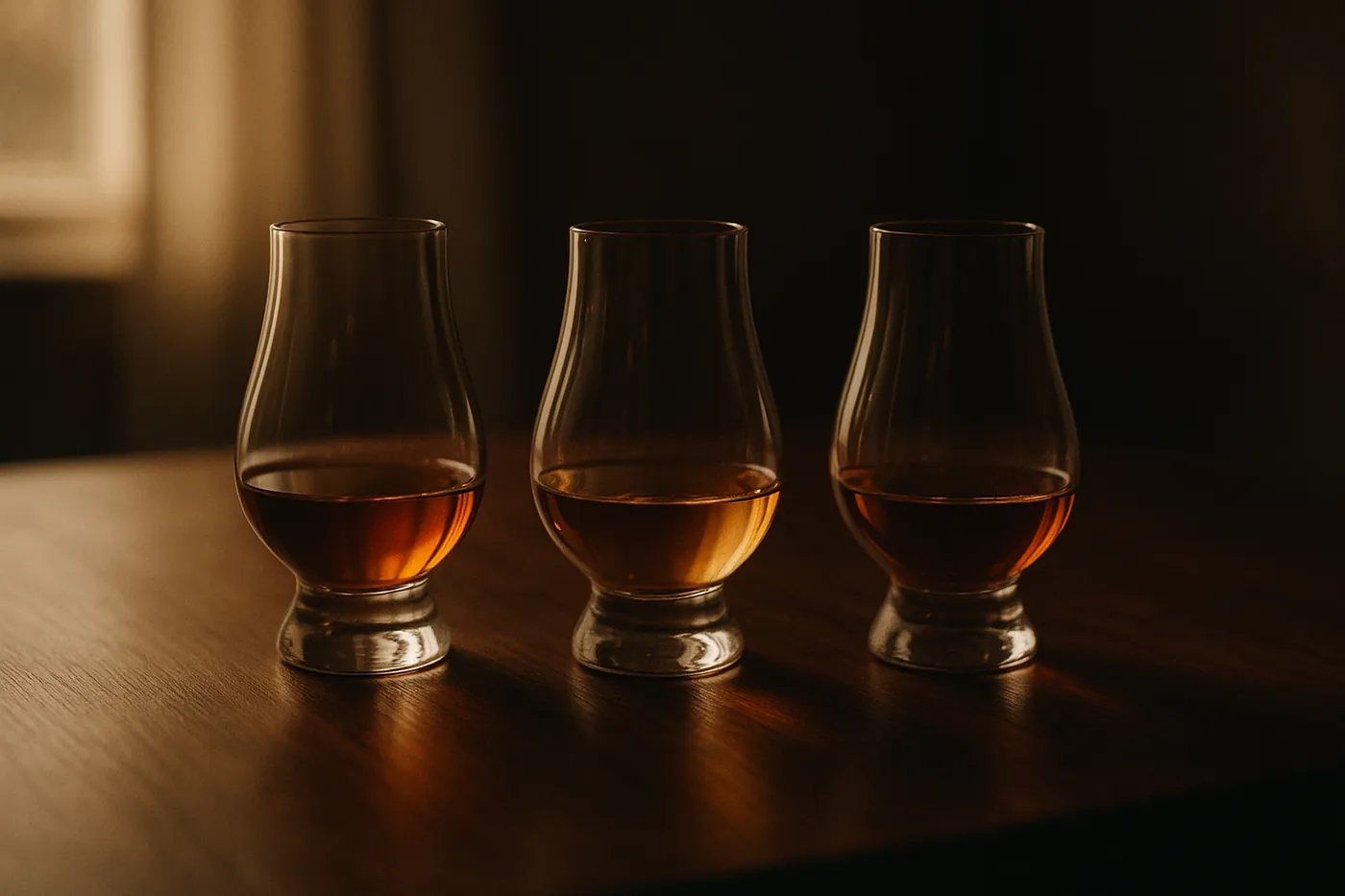
Two bottles you already own, three matching glasses, and somebody willing
to pour. One page. The method is about 150 years old and needs nothing
from us.
Two the same, one different. The sheet below runs the whole test on paper.
How to run it
Pick two whiskeys. Similar ones make a better test than
opposites. Call one A and the other B.
Print the sheet and fold along the dashed line. The bottom half
is the key — the pourer keeps it, and you never see it.
Each round is three glasses, poured in the order the key gives.
Number them 1, 2, 3 left to right.
Taste all three and mark which glass is different — not which
you preferred. Water and a plain cracker between rounds.
Spread eighteen rounds over several nights. Your nose fatigues
fast, and a tired nose turns this into a test of endurance.
Why eighteen? You would get one in three right by pure luck, so a
handful of correct calls means nothing at all. Eighteen is where the
arithmetic can start to tell skill from chance. Fewer is not a failure —
it is simply not yet an answer.
Running it for a table? Eight guests doing three rounds each is
24 calls, already past the line. Add everyone's totals together.
The triangle test
Savorant · savorant.com/triangle
Whiskey A
Whiskey B
Taster
Date
Ring the glass that tasted different — not the one you liked.
After the pourer reveals the round, tick the box.
Got right
Out of
Both numbers → savorant.com/how-we-score
Fold here — pourer keeps the bottom
Pourer’s key. Pour left to right in the order shown. The bold
number is the odd glass — the taster must not see this half.
When you have your two numbers,
the calculator is here — and it will tell you
honestly when the count doesn’t mean anything yet.