Savorant is on Google Play now — free to train daily, 30 days of everything included, no card. iPhone is coming.

Sensory training for whiskey

You already taste it.
You just don’t have the word yet.

Experts don’t smell better than you. They just know the name.

Most people can smell far more than they can name. Savorant hands you the word — ten families, each anchored to something you can buy at a grocery store — and every word you learn joins a library that the next glass gets compared against.

What you walk away with is not a better nose. It is a palate you understand, a vocabulary you can actually use, and the earned confidence to say I know what I taste — out loud, at a bar, without hedging.

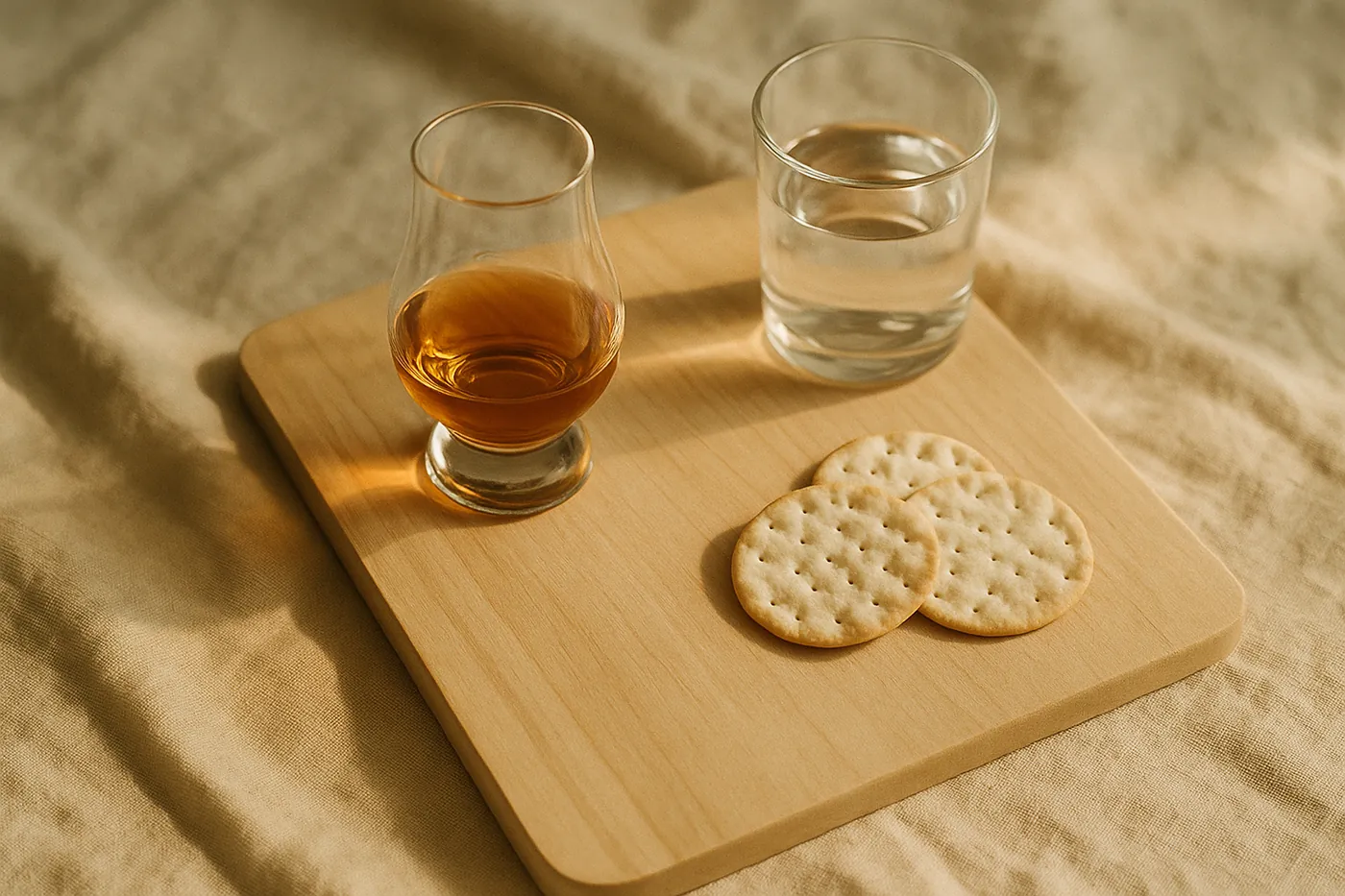
The whole tasting kit: a pour of whiskey, a glass of still water, and plain crackers on a board
The whole kit. A pour, still water, plain crackers — nothing you don’t already own.

Ten families

Every whiskey word lives in one of ten rooms. Touch one — nothing here is scored.

0 of 10 opened.

Two words carry the whole idea

Perception, then association

Your nose reports what is in the glass. That is perception, and yours is already fine — eleven expert wine judges tested against eleven beginners came out with about the same sensitivity. Everything that separates them from you happens next: matching that signal against things you already know — this morning’s coffee, a county-fair caramel apple — and giving it its true name. That is association, and unlike a nose, it can be trained. The studies are here, including the ones that argue with us.

Savorant is the conversation between the two — and each pass around the loop tightens the next. Here is the loop.

  1. Recognition

    Smell the real thing first.

    Every term ships with something off a grocery shelf — the caramel, the clove, the toasted pecan. Relating a food you already know to the flavor in the glass is the whole trick: the anchor hands your mind a handle it already owns, and the nameless note becomes a known thing. The anchors are the method, not decoration.

  2. Language

    Say it at the glass, not an hour later.

    A smell you name is a smell you keep; an unnamed one simply goes. Speak your note and Savorant maps it to the dictionary, mirrors it back in the order a taster works — nose, entry, mid-palate, finish — and offers one better word. One nudge per note, never a red pen.

  3. Memory

    It compounds.

    Every flavor you name joins a library that is yours, and that library is what the next glass gets measured against. That is the loop: a name sharpens the next smell, and the sharper smell earns another name. Six months in you are not working harder — you are working with more.

  4. Proof

    Then you check it, blind.

    All of the above is a feeling until somebody hides the bottle. So the last step is a real test with honest statistics — and it is the one step you can run tonight, on paper, without us.

The first three are what you gain. The fourth is only how you know the first three are real.

Step four — proof

Can you actually tell two whiskeys apart?

A feeling is not a result. Hide the bottle and find out.

Three glasses. Two are the same, one is different. You say which. You would get one in three right with no nose at all — so one correct answer means nothing. The question is whether you get enough right, over enough tries, that luck stops explaining it.

Two things it cannot do. It tells you whether you told these two whiskeys apart, on this night, in these glasses — not whether your palate is good. And it cannot separate “I smelled a difference” from “I noticed the pour order, or a chip in the glass.” The rest of the method is published here.

And the part no exam can offer: in the app, one mystery pour in six is secretly a whiskey you already read — months ago. You find out after you file whether you called the same families and landed the measures in the same place. An examiner grades your description once. The record asks, for years, whether you agree with yourself.

Running it for a table? Eight guests, three rounds each, is 24 calls — already past the line. Add the totals together.

What it will not do

It will not improve your sense of smell. Training changes what you can name and tell apart — not the hardware. Most of the research on smell training studied people recovering lost smell, not healthy drinkers, and nobody has studied whether an app like this one works. Your record would be the first data of its kind.

What you get

Two ways in

Start naming, tonight. The ten families and one bottle you already own. No app, no account. Or test yourself first. The printable sheet — where you stand before you train anything.

Want the app itself? Write to John at palate@savorant.com and he’ll tell you when it opens. One email, from a person, and nothing else.

savorant · SAV-or-ahnt · one who knows what they taste. The app does not produce tastings — it produces savorants. Become one.