savorant.

Whiskey and bourbon tasting: learn the words for what you taste, then find out, blind, whether they hold up.

You already taste it. You just don’t have the word yet.

Show me one round — no account

Free to train daily · 30 days of everything included · no card. 21+, United States.

say it: SAV-or-ahnt · one who knows what they taste

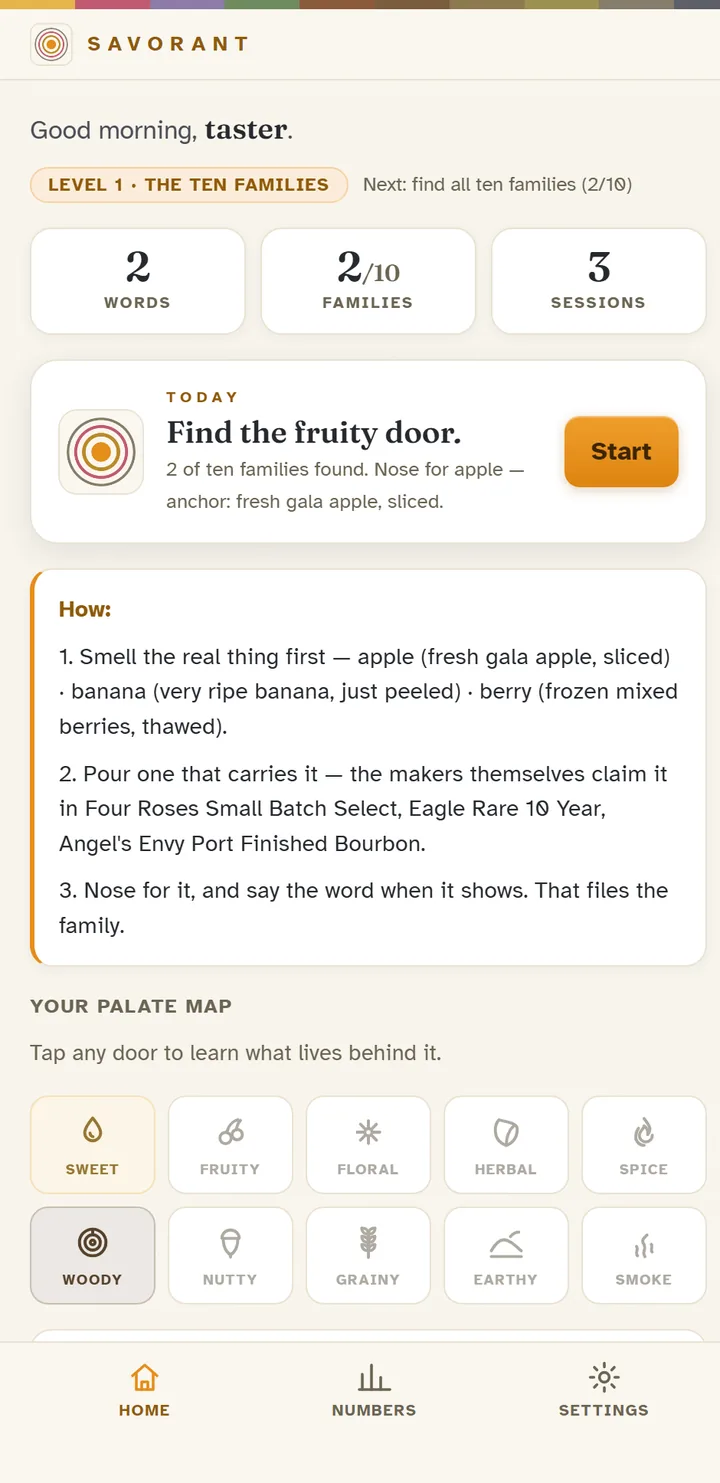
The Savorant home screen: your level, your palate map, today's assignment
Ear training, for the palate

Musicians name what they hear. You can name what you taste.

Speak your tasting notes out loud — it interprets them, coaches your vocabulary one nudge at a time, and measures your growth.

Today’s word —

Your palate map — touch the families and light them all

Ten families of flavor live here. Touch one.

The method, in three moves.

No wheel to memorize, no exam voice. The training is the same loop every expert used — done out loud, with things you already own.

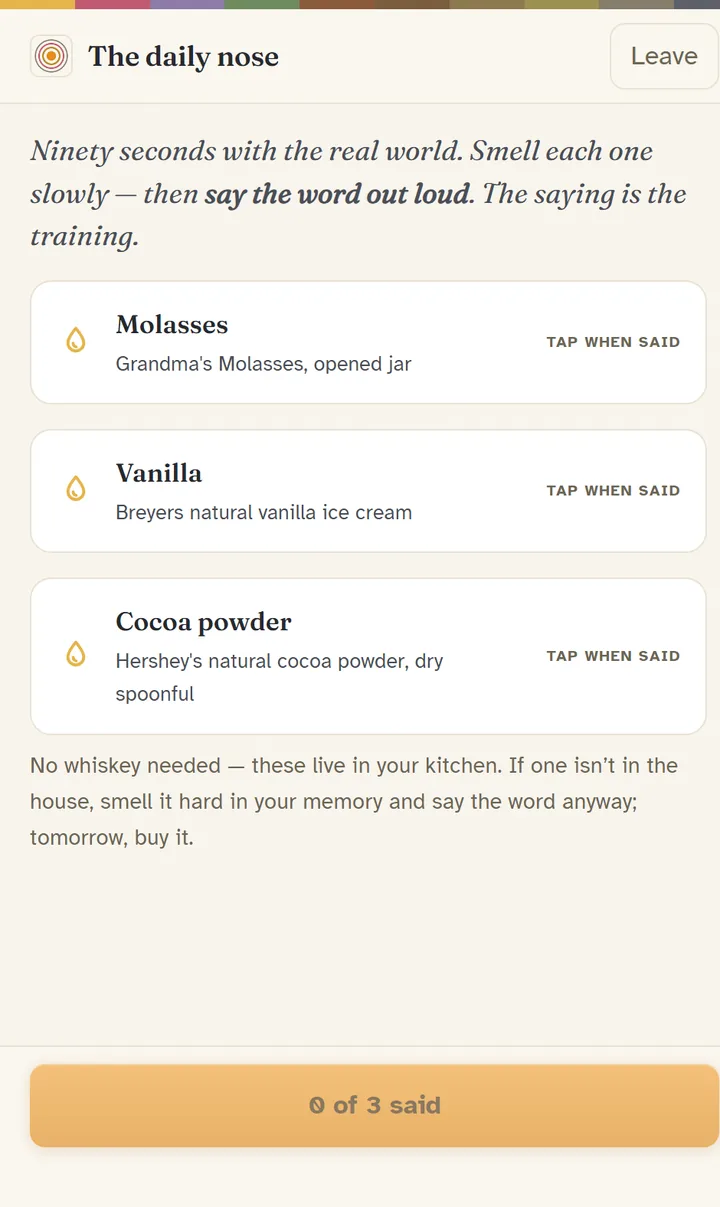
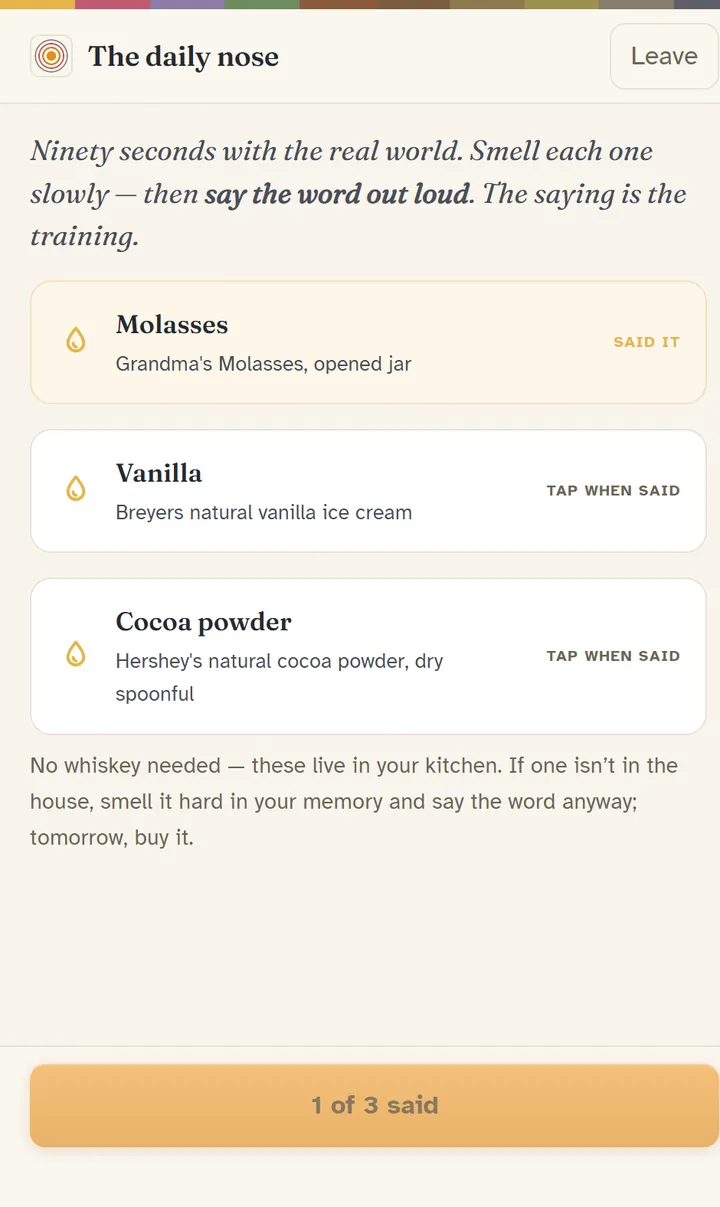
The Daily Nose: three grocery-shelf smells, said out loud

01 · Smell the real thing

Your grocery shelf is the classroom.

Every flavor family is anchored to something real — molasses, vanilla ice cream, cocoa. Ninety seconds a day with the actual jar hands your mind a handle it already owns. Life is the kit: why the grocery aisle beats a box of vials.

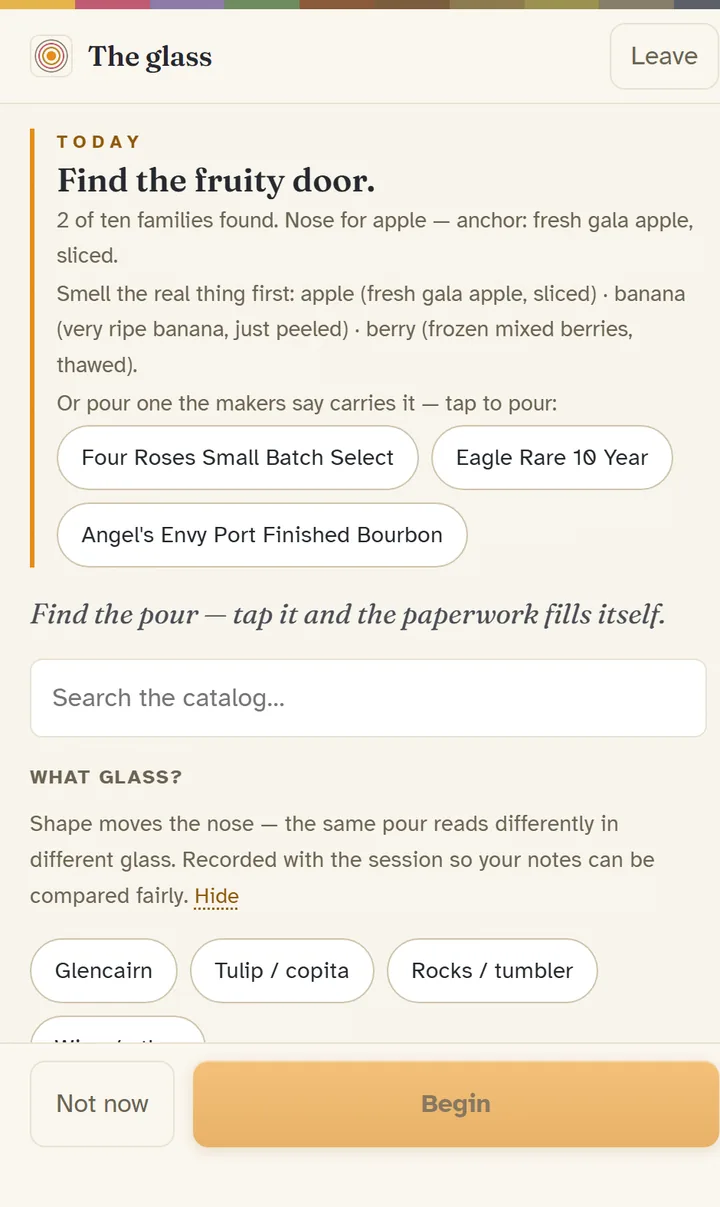
A guided session: today's assignment, the pour, the glass

02 · Say what you find

Out loud, at the glass.

Speak your note in your own words. Savorant maps them in tasting order — nose, palate, finish — and offers one better word. One nudge per note, never a red pen. Every word you learn stays, and the next glass gets compared against all of them.

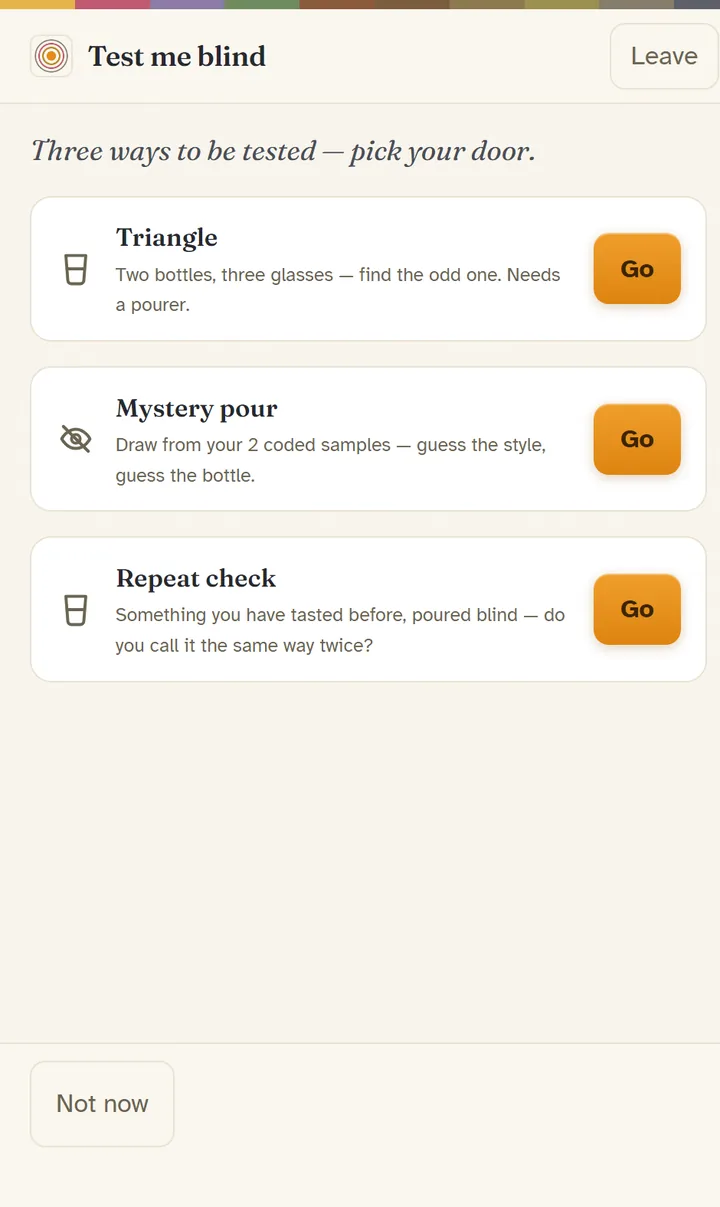
Test me blind: triangle, mystery pour, repeat check

03 · Then check it blind

Honest statistics, no mercy, no drama.

Triangles, mystery pours, and repeat checks — scored with real odds, and silent until there are enough rounds to mean anything. The record shows whether you agree with yourself.

More than “smooth.”

Ask most people what’s in their glass and you get “smooth.” It isn’t wrong. It just doesn’t say what the whiskey is like.

What you can name

The word, not just the feeling.

Each word is tied to something off a grocery shelf — molasses, vanilla ice cream, cocoa — so when you meet it in the glass, you have a name for it. Every word you learn stays, and the next glass gets compared against all of them.

Whether it holds up

Checked blind.

Three glasses, two the same, one different, and you don’t know which. Pick the odd one enough times and the odds say whether it was skill or luck. Taste the same whiskey twice without knowing and see whether you describe it the same way. That can be wrong, which is why it means something.

Blind, with a friend or on your own.

A blind test only counts if you can’t see which glass is which. Here is how Savorant keeps you honest either way.

With a friend

They pour. You never see the order.

Hand them the phone: it shows them a secret order for three glasses, two the same and one different. You taste and call the odd one. A table of guests works too. The printable triangle sheet has 18 randomized orders and a fold-under key for whoever pours.

On your own

The glass shuffle.

  1. Pour all three. Put a small mark under the base of the odd glass.
  2. Close your eyes and slide them around until you’ve lost track.
  3. Taste, call the odd one, then lift all three to find the mark.

Mystery pours work the same way: up to four coded pours under marked glasses. Taste one, name it, turn it over.

Coded samples you filled yourself are only as blind as your memory, so the app keeps their names hidden and passes over any you’ve looked at this week. The glass shuffle needs no memory at all.

Eighteen glasses. Get ten right, and it isn’t luck.

Every triangle gives you a one-in-three chance of being right by guessing. So one right answer means nothing, and Savorant won’t pretend it does.

10 / 18beats chance at the standard 5% line. Nine doesn’t.

The whole method is in the open: how we score a blind test, with a calculator for your own numbers.

A real course, not a notebook.

Levels are earned by the words you can name unprompted, not by days logged.

What it won’t do. It won’t sharpen your sense of smell. It teaches you to name and tell apart what you already smell.

Most smell-training research studied people recovering lost smell, and nobody has yet studied whether an app like this one works. Here is what the research does and doesn’t show. So we’re studying it, in the open, with every plan published before the data is in: eight open studies you can join from the app.

Questions people ask.

Can I test myself blind with nobody to pour?

Yes. Use the glass shuffle: pour all three glasses yourself, put a small mark under the base of the odd one, then shuffle them with your eyes closed. Call the odd glass, then lift all three to see where the mark is. Mystery pours work the same way with up to four coded pours under marked glasses. With a friend, run a full triangle: they hold the phone and see a secret pour order you never do.

How many right answers beat luck?

In a triangle test you have a one-in-three chance of being right by luck. At 18 rounds, about 10 right beats chance at the standard 5% line. Savorant stays silent under 18 rounds and only makes a call at fixed points: 18, then 36, then 54.

I can already tell my whiskeys apart. Why would I need an app?

Good, then tell us what’s different. If the word that comes to mind is “smooth,” you’re in good company; most of us reach for the word and land there. Savorant hands you the next one, tied to something you’ve smelled all your life. Then it checks, blind, whether it holds up.

Do I need an aroma kit?

No. Every flavor family is anchored to something from the grocery store, like molasses, vanilla ice cream and cocoa. About 90 seconds a day with the real jar. A kit teaches one version of a smell; the grocery aisle teaches it the way you’ll meet it. If you own a kit, use it alongside. See the full shopping list.

Will it improve my sense of smell?

No, and we will not claim it does. Training changes what you can name and tell apart, not the nose itself. Nobody has yet studied whether an app like this one works.

Is there an iPhone version?

Yes. Savorant is on the App Store for iPhone and iPad, and on Google Play for Android.

What does it cost?

Daily training is free: unlimited guided sessions, all ten flavor families, the daily drill, your whole record and the first six course units. Every new account gets 30 days of everything with no card. Savorant Full is $29.99 a year, or $69.99 once for Founding Tasters. It is for adults 21 and over in the United States.

Does it help if I’m studying for WSET?

It is practice between classes, not a credential. There is a page that lines up Savorant’s ten flavor families with the WSET Level 3 spirits tasting terms.


Pour tonight. Know it by name.

Free to train daily — the ten families, guided tastings, and your record cost nothing. Every new account starts with 30 days of everything, no card, nothing to cancel.

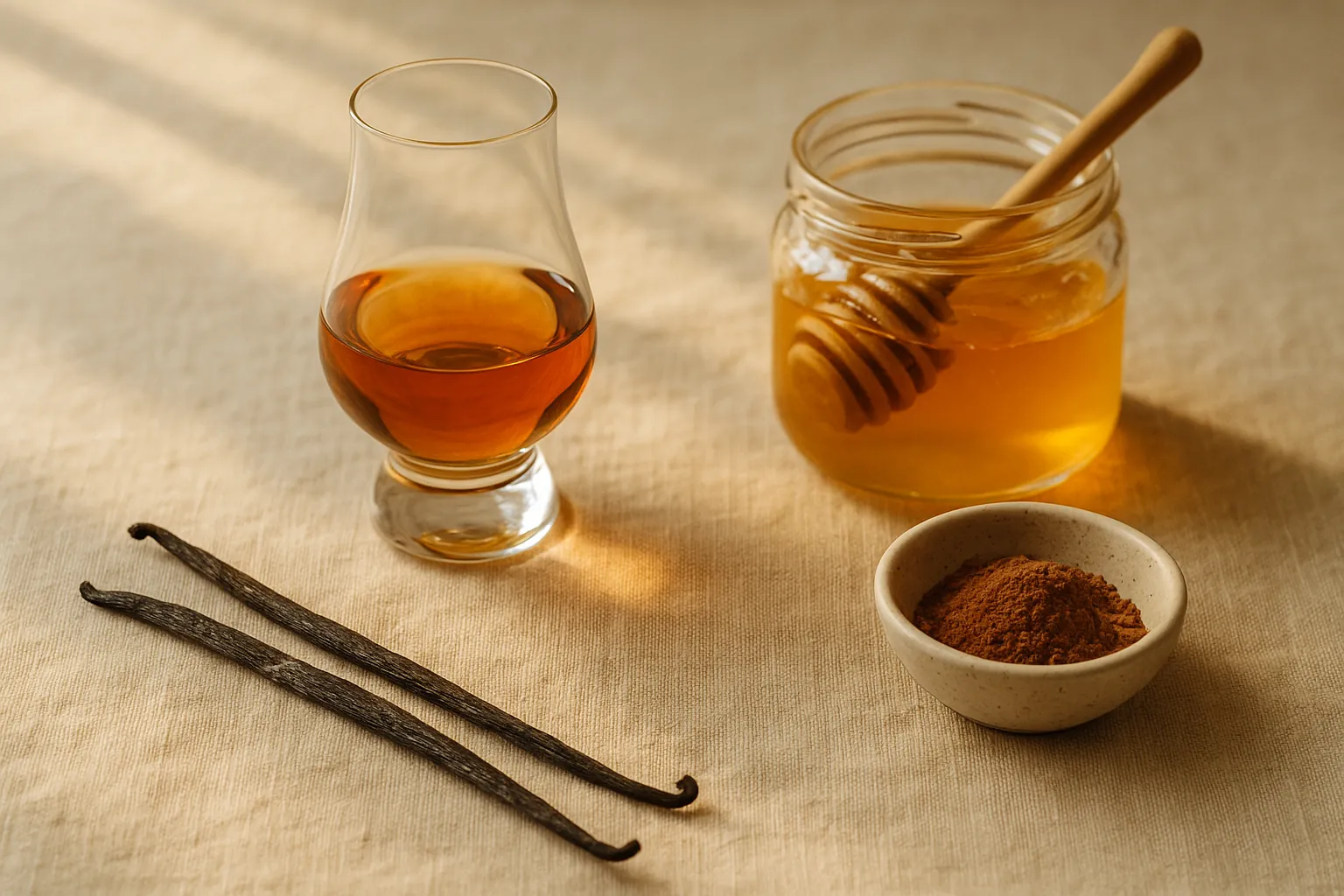
The whole classroom: a pour, a jar of honey, a vanilla bean, a spoon of cocoa.

A glass of whiskey beside its grocery anchors: honey, vanilla beans, and cocoa powder

The mailing list

New products, app updates, and weekly tasting tips that make every pour read better — written by a person, sent only when there’s something worth your time. No daily drip, no sharing. Leave anytime with a one-word reply. Privacy

© 2026 Drunken Unicorn Productions